
Most homeowners don’t know what hail damage actually looks like until someone points it out. That gap is exactly what storm-chasing crews and, on the flip side, insurance adjusters both count on. After a bad hailstorm rolls through North Texas, we get calls from people who are panicking over algae streaks and normal wear, and other calls from people who had zero idea their roof had real, claim-worthy damage. Here’s what to actually look for before you climb a ladder or call anyone.
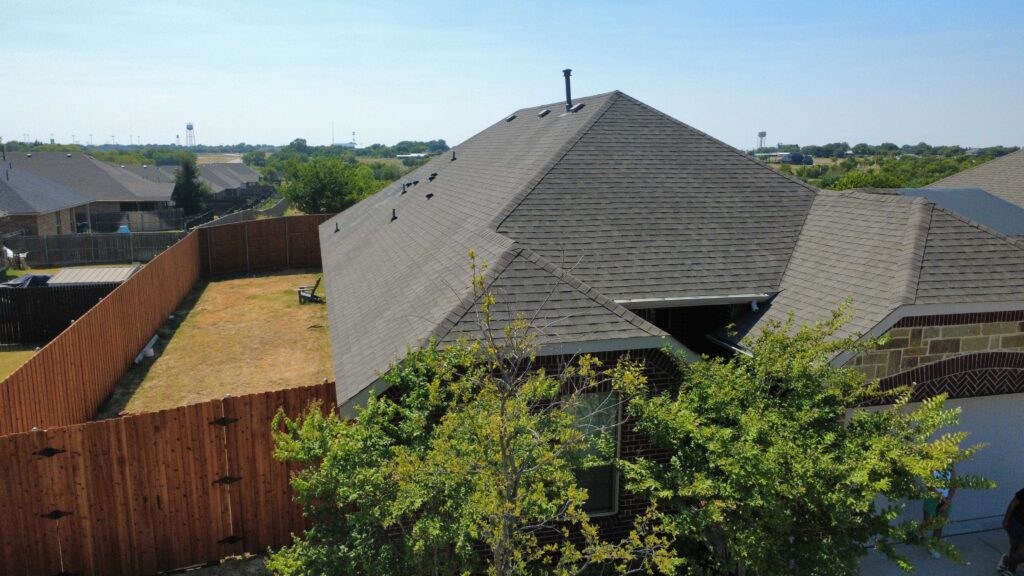
Start at the gutters, not the shingles
Before you ever look at the roof plane, check the gutters and downspouts. Hail knocks loose granules off asphalt shingles, and those granules collect at the gutter line and in downspout splash areas. A build-up of gritty, sand-like granules after a storm is one of the earliest and most reliable signs that your shingles took an impact, even if you can’t see anything unusual from the ground.
What real hail bruising looks like on shingles
Genuine hail hits show up as random, scattered dark spots or dimples on the shingle surface, often with a slightly soft or spongy feel when pressed. The pattern usually isn’t uniform. It follows the direction of the storm and tends to cluster on one or two slopes rather than covering the whole roof evenly. If you gently press on a suspected hit and it feels mushy underneath rather than firm, that’s the fiberglass mat breaking down, and it’s a strong indicator of impact damage rather than ordinary aging.
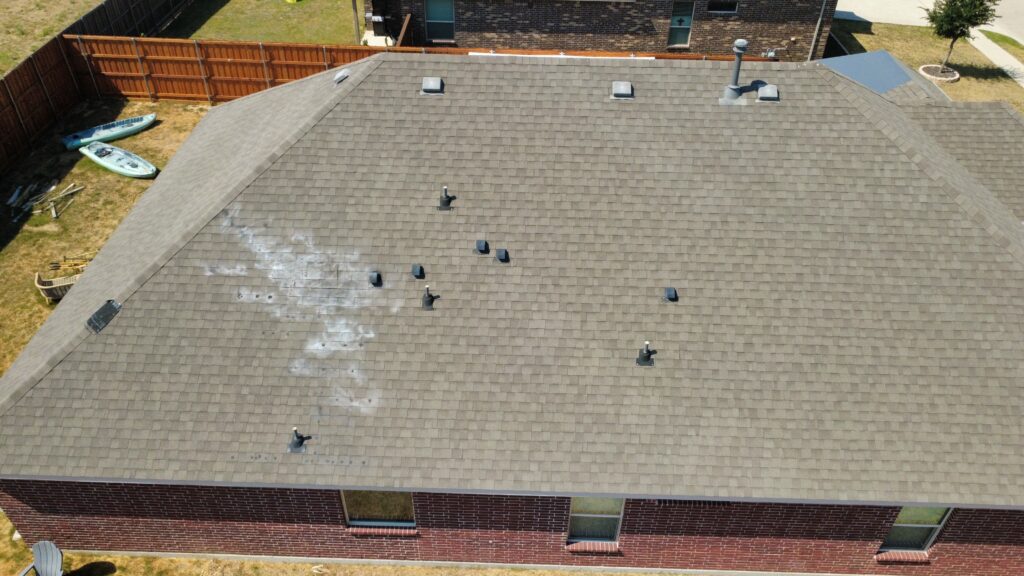
The metal tells the truth faster than the shingles do
Soft metal components take hail impact more visibly than shingles, so they’re a fast way to confirm a storm actually produced damaging hail. Check the ridge vents, roof jacks, gutter aprons, and any exposed flashing for small, round dents. Air conditioning units, window screens, and mailboxes dent the same way. If those show clear impact marks, it’s a good sign your roof took a real hit too, even in spots you can’t easily see.
What’s usually NOT storm damage
Dark streaking is typically algae growth, not damage. Curling or cupped shingle edges are usually age and heat, not hail. Cracking that follows a straight, consistent line across many shingles is more often thermal splitting than impact. None of these need an insurance claim, and pointing a camera at them for an adjuster usually just wastes everyone’s time.
Why photo documentation matters more than the damage itself
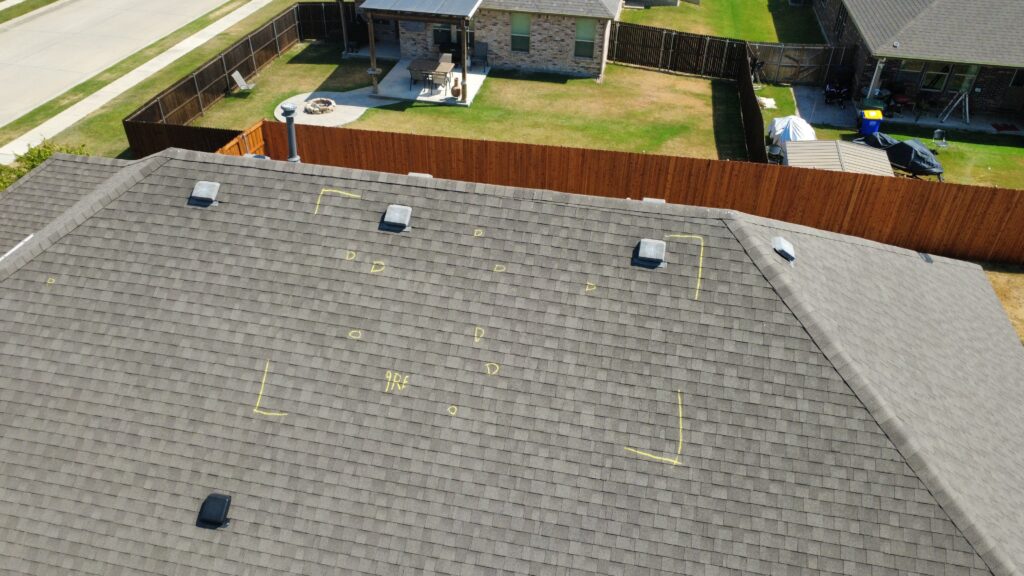
An adjuster only approves what’s documented. Clear, well-lit, close-up photos of each affected area, paired with a wider shot showing where it sits on the roof, make the difference between a full claim and a partial one. This is exactly why we scan every roof with FAA Part 107 certified drone pilots and EagleView imaging instead of relying on a quick walk-around: millimeter-level photo documentation from every angle holds up when it’s time to talk to your insurance company.
If a recent storm has you wondering whether what you’re seeing is real damage or normal wear, we’ll come take a look for free. Book a same-day AI drone inspection at texanroofworks.com or call (972) 584-7849. We serve Southlake, Keller, Grapevine, Colleyville, Flower Mound, Arlington, and all of DFW.
Think you are seeing hail damage? We can confirm it in about 20 minutes with a free AI drone roof inspection, handle the hail damage repair, and walk you through the insurance claim if the damage is real.
Still unsure about what you’re seeing on your own roof? We answer the questions DFW homeowners ask us most — timelines, deductibles, permits and warranties — on our roofing FAQ page.
Texan Roofworks works across the whole Dallas–Fort Worth metroplex with crews across the metroplex. Browse every DFW service area we cover, or go straight to Plano, Frisco.